Someone wants to drive it
A used car is worth what the next owner will pay to put it back on the road.
Scrap value, explained
“Scrap” isn't a verdict on your car. It's a pricing method. When a vehicle is past the point where anyone wants to drive it, it still has a specific dollar value based on what it weighs and what comes off it—and you should be the one collecting that value.
The crossover point
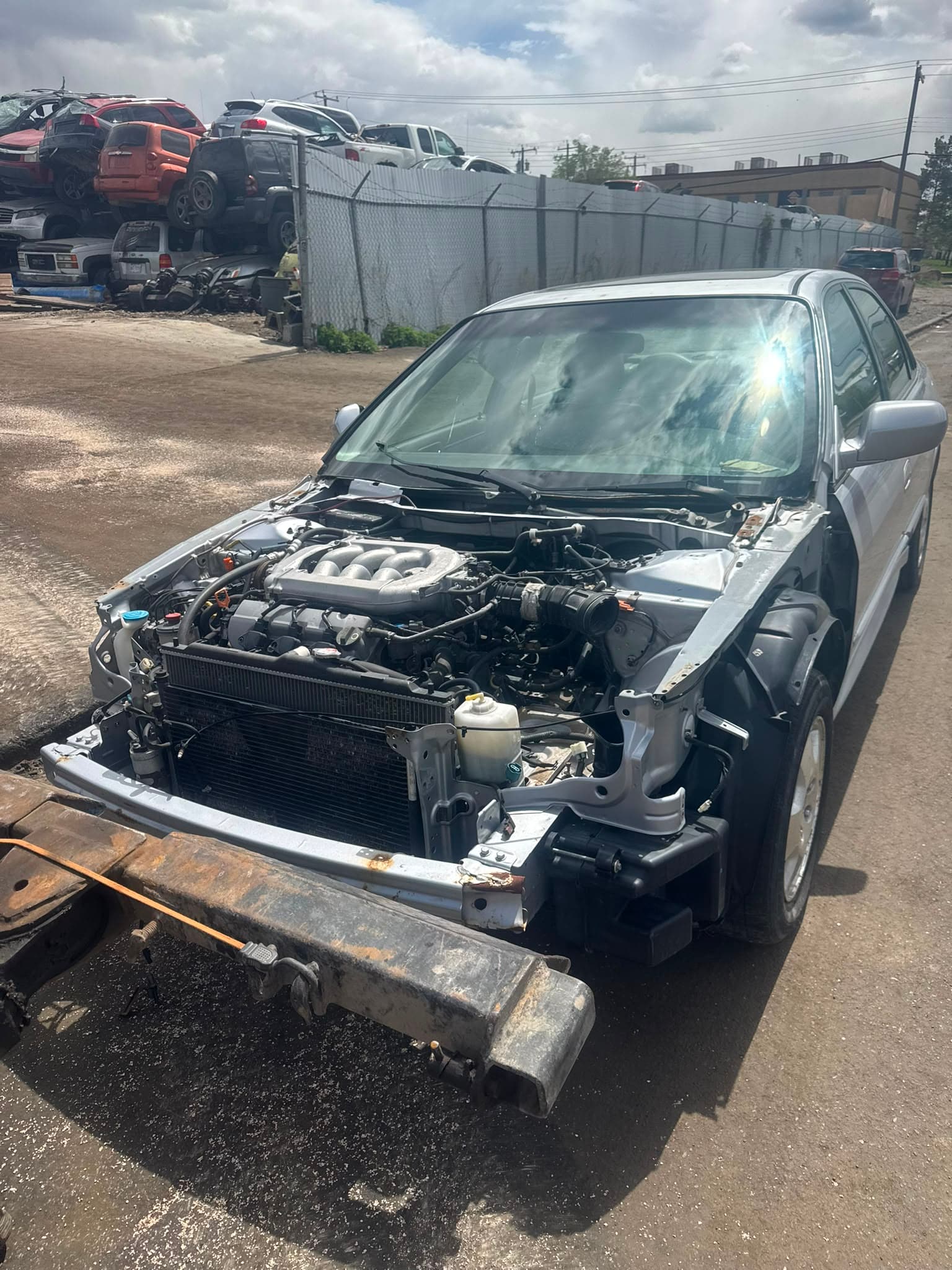
There's a line, and most people cross it without noticing.
A used car is worth what the next owner will pay to put it back on the road.
A junk car still has enough repair or parts value to support another use.
A scrap car is worth what the recoverable steel, non-ferrous metal and remaining parts are worth.
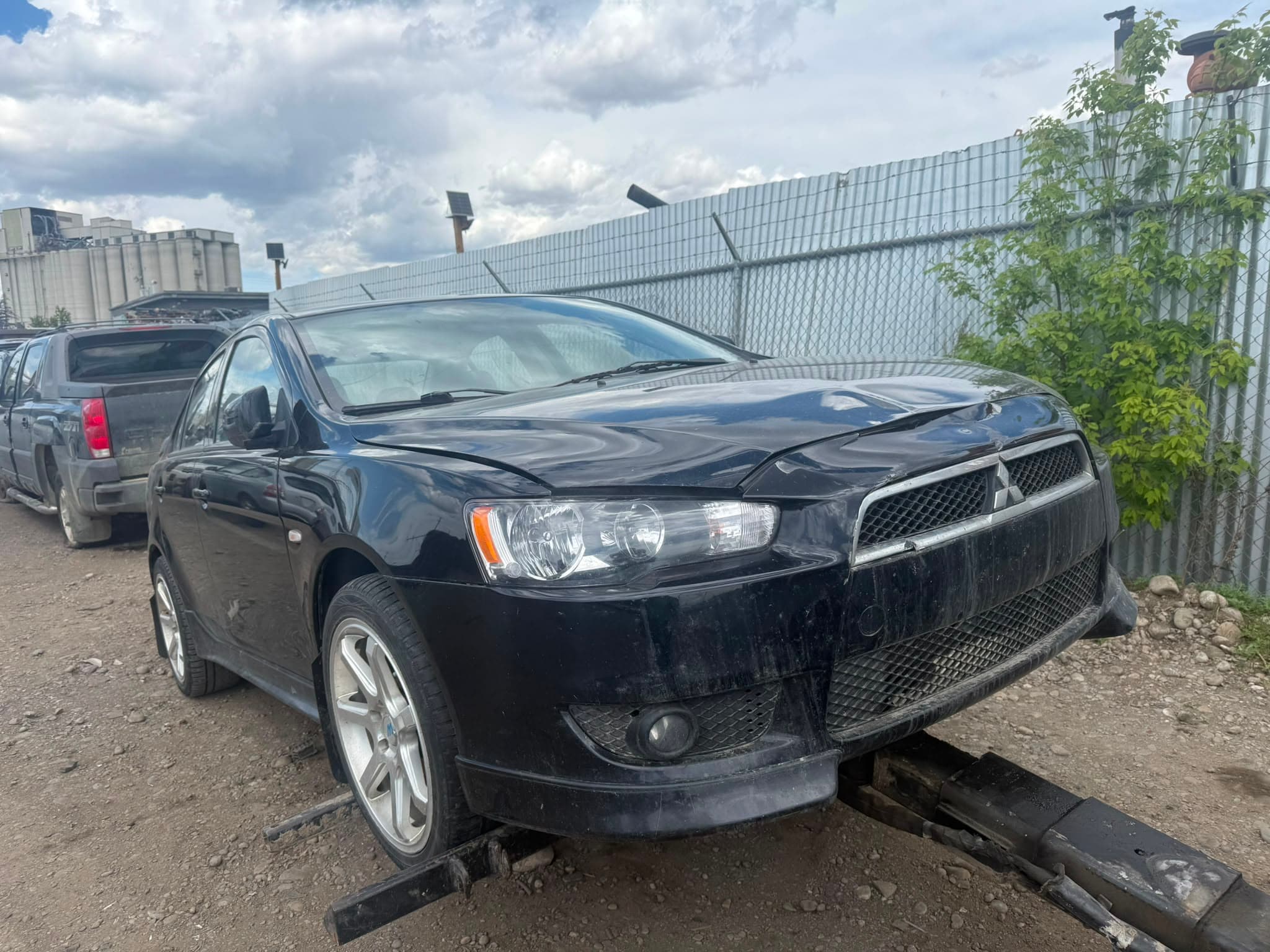
The crossover usually happens when the frame or rockers have rusted past a safe repair, the engine or transmission has failed on an older vehicle, an out-of-province inspection produces a repair list longer than the car's value, or it has simply reached the end after twenty-two Central Alberta winters.
None of that makes it worthless. It changes how it gets valued.
No mystery-yard math
Most people have never been told the honest version. Your offer is a stack of recoverable values—not one vague number pulled from the air.
Steel is traded by the tonne. A compact sedan weighs roughly 1,200–1,400 kg, a half-ton about 2,200 kg, and a heavy diesel can pass 3,000 kg. That difference alone can mean hundreds of dollars.
Aluminium wheels and engine components, copper wiring, the radiator and alternator are worth several times more per kilo than plain steel.
Catalytic converters contain platinum, palladium and rhodium. If yours is still on the vehicle, it factors into the offer. If it has been cut off, we explain exactly how that changes the number.
A good alternator, clean doors, a working window regulator or a useful rear differential has more value as a part than as shredded metal—and your offer should reflect that.
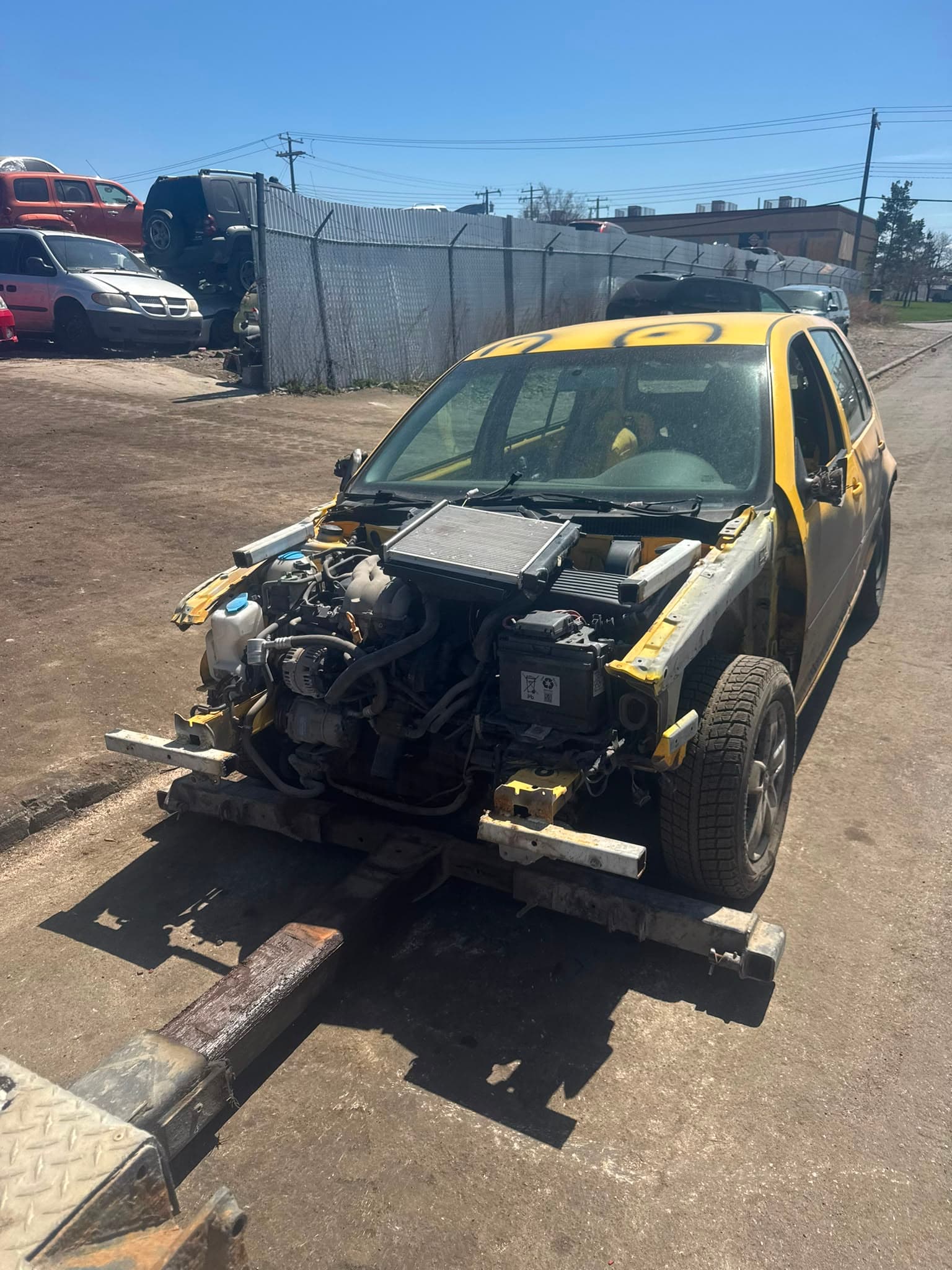
A vehicle already missing its engine, wheels or interior is worth less. We still buy stripped shells and partially dismantled cars; we simply price what is actually there.
Realistic numbers
These are scrap-basis figures—not teaser prices and not guarantees made without seeing the details.
Same car, different math
Because they are not measuring the same thing.
A four-second quote based only on tonnes ignores the converter, wheels, non-ferrous metal and anything salvageable.
The quoted number looks stronger until towing is deducted at pickup and the amount you were told is not the amount you receive.
Parts, non-ferrous content, weight and free towing are all accounted for. The figure holds for the pickup window we agree on.
Commodity timing genuinely matters. Steel and non-ferrous prices move, so a quote from six weeks ago is not today's market.
After pickup
An end-of-life vehicle cannot simply be crushed. There is a sequence, and skipping it is how contaminated ground happens.
Engine oil, coolant, brake and transmission fluid, remaining fuel and air-conditioning refrigerant are recovered safely.
The battery, tires and—on older vehicles—mercury switches go into their correct recycling streams.
Anything with resale life is removed and inventoried for repair shops, rebuilders and other vehicles.
Ferrous and non-ferrous material becomes rebar, structural steel or new body panels instead of waste.
It is not glamorous work, but given how much ground around here drains toward the Red Deer River, it matters.
From fence line to flatbed
One honest description, one firm number and one free pickup.
Call or send the form with the year, make, model and a rough description. Tell us if the converter is gone, parts are missing, or it has been sitting in a field for six years. Accuracy gets you an accurate number.
We come back the same day with a single cash figure. If it works for you, we book a pickup—usually the same day or the next.
We arrive, complete the bill of sale, pay you, and load the vehicle. No towing fee, no deduction and no follow-up invoice.
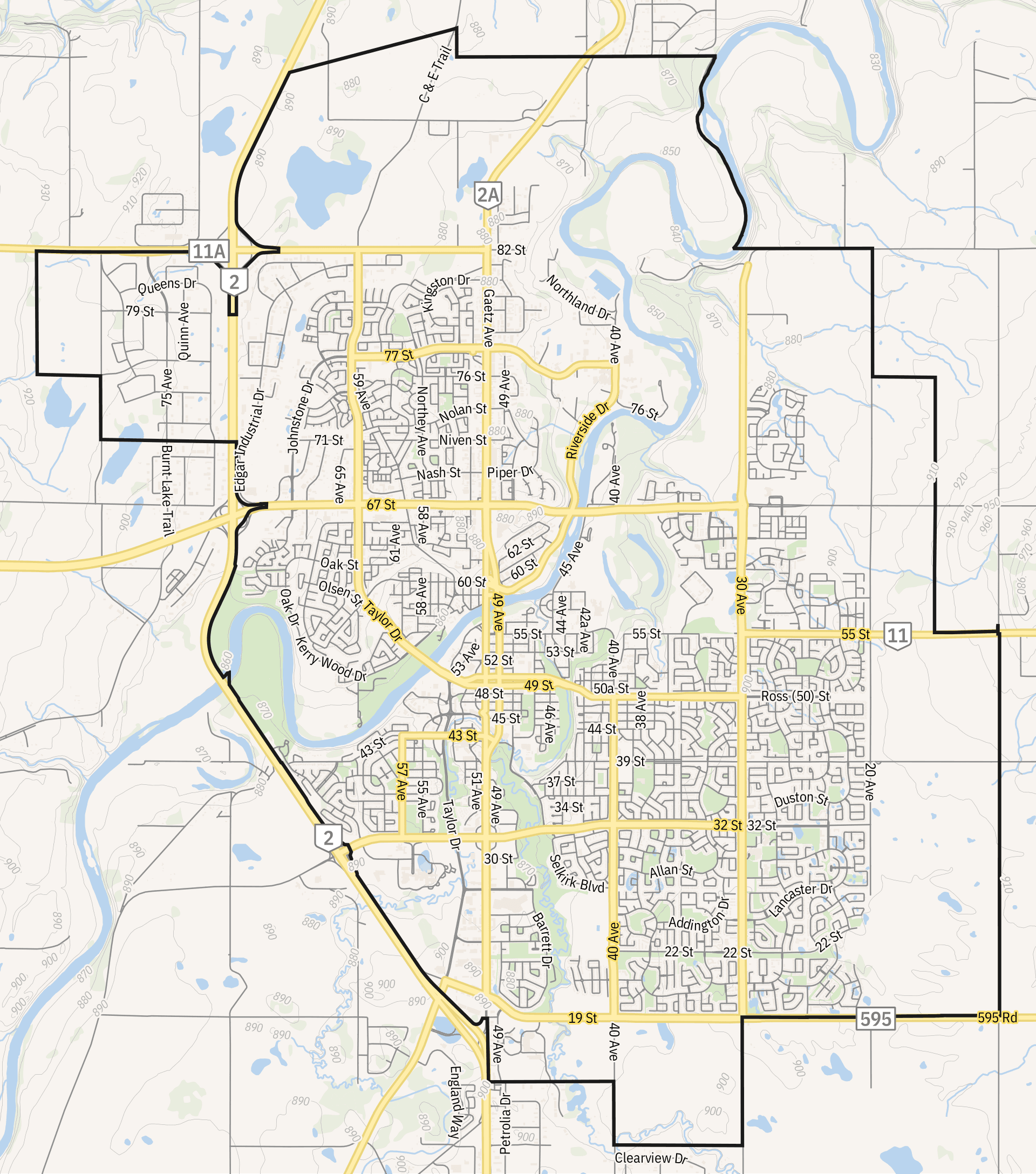
Where we collect
We collect across Red Deer—north and south of the river, residential and industrial—plus acreages and farms throughout Red Deer County.
Free pickup extends to eighteen Central Alberta towns, including Blackfalds, Lacombe, Sylvan Lake, Penhold, Innisfail, Ponoka, Rimbey, Eckville, Olds and Stettler.
Straight answers
Still unsure what category your vehicle falls into? Describe it to us. You do not need to diagnose it first.
(403) 427-0732Somewhere between $150 and $2,500 depending on weight, completeness and what is salvageable. Give us the year, make and model and we’ll give you a real figure rather than a range.
Weight sets the baseline, but it isn’t the whole calculation. Non-ferrous content, the converter and reusable parts all move the number. Pricing on weight alone would be simpler for us and worse for you.
You can, and some people do. Just understand it lowers the offer, usually by more than you’ll make selling the parts individually. If you want to pull a specific item for sentimental or practical reasons, tell us and we’ll quote around it.
No. We buy stripped shells, cars missing engines, and vehicles that have already been partly dismantled. The offer reflects what is actually there.
Never. If the vehicle’s scrap value is low, the offer is low. It doesn’t go negative, and you’re not charged for the tow.
Sometimes. Motorhomes and larger units depend on size and access. Call and describe it—we’ll tell you straight whether it’s something we can handle.
Photo ID matching the registered owner and proof of ownership. We complete the bill of sale on site. Keep your plate.
A real figure today
It takes one phone call and about ninety seconds. Tell us what is there, what is missing and where it is sitting—we will handle the rest.