Make it safe
Fluids and hazardous materials come out first: oils, coolant, fuel, refrigerant, battery and tires.
Parts first. Material second.
“Wrecker” is a misleading word. Almost nothing about the job involves wrecking anything. It is closer to careful disassembly—taking a vehicle apart in the right order so parts worth saving get saved and the rest is recycled properly. Understanding that is also the fastest way to understand what your car is worth.
Inventory, not destruction
The public picture is a yard full of rust and a crusher at the back. The reality is closer to inventory management.
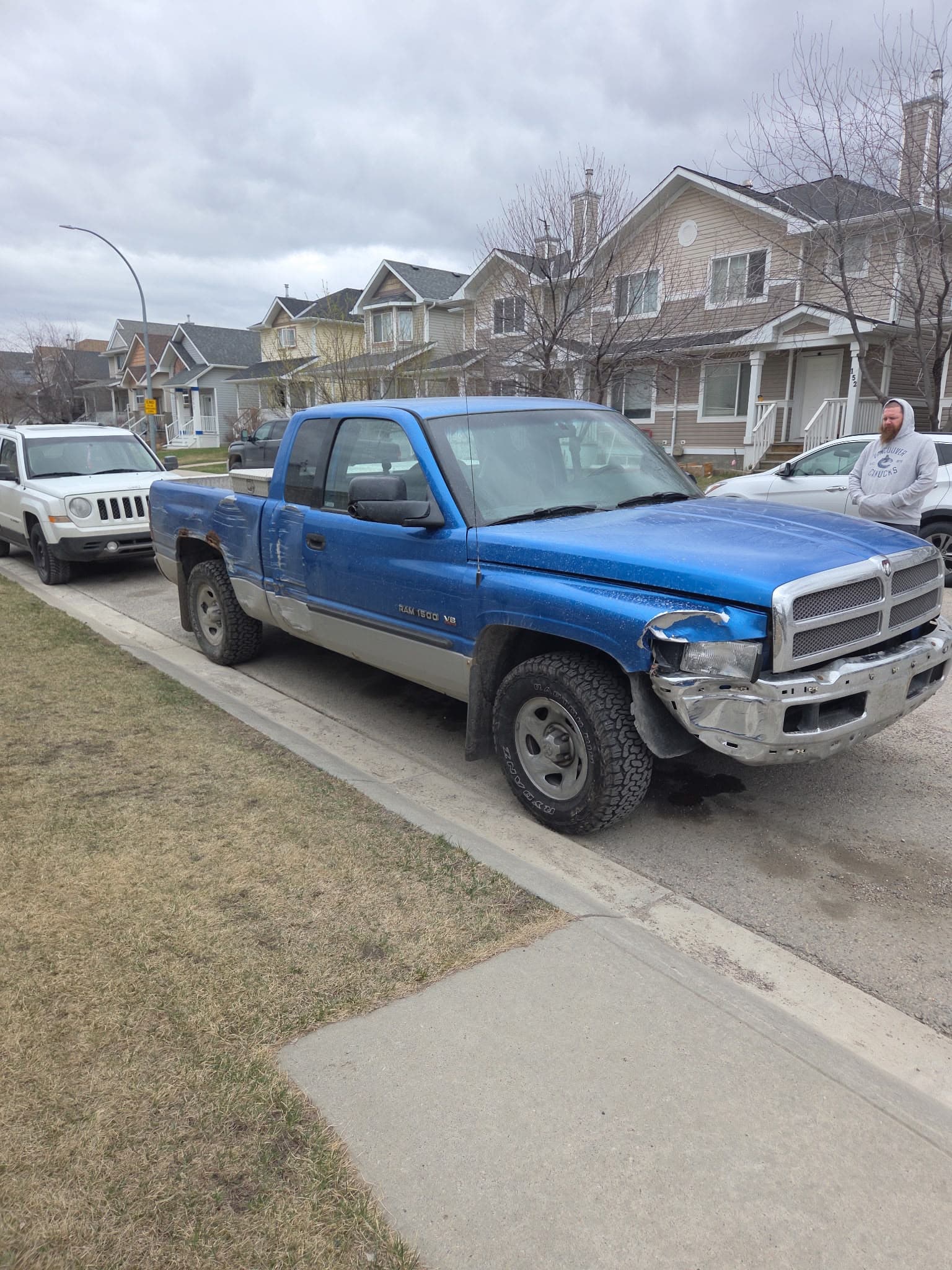
When a vehicle comes in, the first question is not “how do we get rid of this?” It is “what is on this that somebody still needs?” Thousands of Alberta vehicles need a used mirror, axle, transfer case, window regulator or headlight for a model that may have left production years ago.
New parts may not exist—or may cost more than the vehicle is worth.
Fluids and hazardous materials come out first: oils, coolant, fuel, refrigerant, battery and tires.
Engine, transmission, differentials, alternator, starter, steering rack and radiator are assessed.
Doors, hoods, tailgates, mirrors, lights, seats, glass and wheels come off where reusable.
Every viable component is assessed, identified and made available for the vehicle that needs it next.
The stripped remainder is separated into recoverable metal and returned to the material supply chain.
The value connection
A buyer who only recycles metal can only pay for metal. A buyer who dismantles can pay for metal plus everything worth saving. Those are different numbers—sometimes by several hundred dollars on the same vehicle.
It also explains why two apparently similar cars get very different offers. A 2013 half-ton with a good 5.3 and clean doors has components people actively search for. A 2013 sedan from a model line that never sold well here may have almost none.
Same age. Same condition. Completely different demand.
Used-parts demand is specific, local and unsentimental. It is also why a vehicle already missing its engine and wheels is worth less: most of what we were paying for has already left.
Central Alberta demand
Our demand profile is not Vancouver's or Toronto's. Local roads, weather and vehicle preferences decide what moves.
Boxes, tailgates, transfer cases, front differentials, 4x4 hubs and diesel components move fastest. This is truck country.
Brake and fuel lines, rocker panels, box sides, cab corners and suspension components are constantly needed because local vehicles rust from below.
Block heaters, batteries, starters, alternators, heater cores and blower motors all have reliable second lives after −30 °C mornings.
Gravel roads and highway kilometres mean constant glass damage, while headlight assemblies remain among Alberta’s most-searched used parts.
Similar words, different businesses
Weight in, metal out. Fast and simple, with an offer reflecting what the vehicle weighs.
The vehicle can be worth more because more of it is treated as something useful.
If your vehicle still has usable components, a scrap-only quote may leave money behind. A stripped, rusted-through shell really may be just metal—and we will tell you when that is the case.
What we'll take
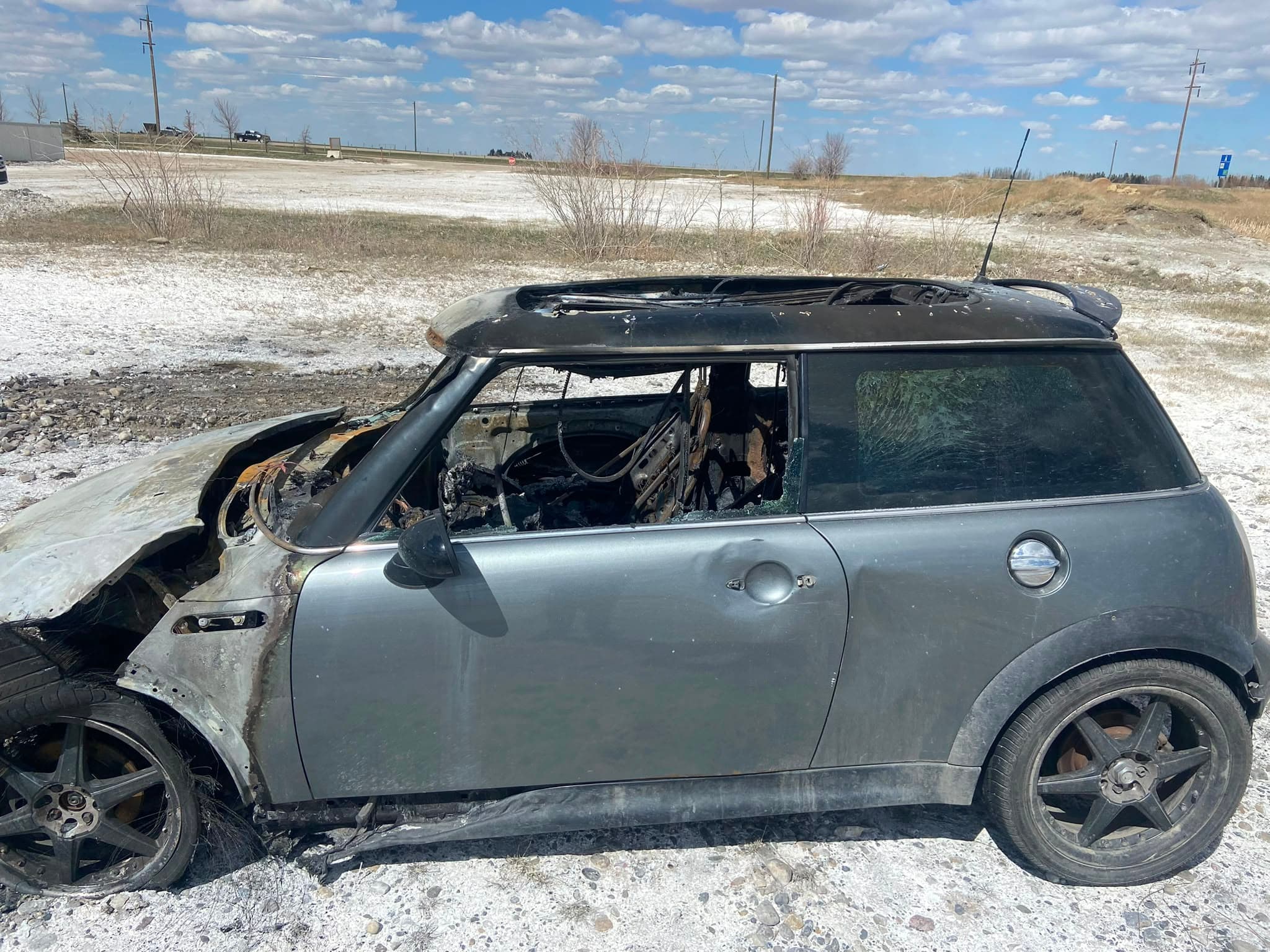
Condition genuinely does not matter: collision, hail, fire, flood, frame rot, seized engines, blown transmissions, failed inspections, missing parts, partly dismantled, or sitting in a field since the Klein years. It all has a number.
The environmental side, without the sermon
It contains litres of things that should never reach groundwater: engine oil, coolant, transmission and brake fluid, gear oil, fuel, refrigerant, battery acid and, on older vehicles, mercury switches.
Doing it properly costs more and takes longer. It is also the reason the industry is regulated—and the alternative to a vehicle slowly leaking into county soil that drains toward the Red Deer River.
Selling to us
Phone or fill in the form with year, make, model and condition. Accuracy about missing or broken parts gets you an accurate number.
We return the same day with a figure that includes towing. If it works, pickup is usually today or tomorrow.
We complete the bill of sale, pay you and load it. Bring matching photo ID and proof of ownership; keep your Alberta plate.
Where we collect
All of Red Deer, including Edgar Industrial Park, Queens Business Park, Northlands and Riverside Light Industrial. Shops with abandoned customer vehicles, fleets retiring units and body shops clearing write-offs are regular calls.
Beyond the city, free collection runs throughout Red Deer County and to eighteen Central Alberta towns including Blackfalds, Lacombe, Sylvan Lake, Innisfail, Penhold, Ponoka, Eckville, Rimbey, Olds and Stettler.
Questions about auto salvage
Have a fleet, partly dismantled vehicle or an ownership question? Call and describe it.
(403) 427-0732Our side of the business is buying vehicles and dismantling them. If you are after a specific part, call and describe it—we can usually point you somewhere useful even when we cannot supply it ourselves.
Yes. The offer will reflect what is left, but a stripped shell still has value and we will still tow it free.
Usually, if the vehicle has salvageable components. On a completely stripped or rusted-through shell, the two are much closer. We will be honest about which situation yours is.
Photo ID matching the registered owner and proof of ownership. We handle the bill of sale.
Regularly. Shops, farms, contractors and municipalities. Multiple units in one location are efficient for us, and that improves what we can pay per vehicle.
The vehicle is processed and reported through the proper channels. You cancel or transfer your registration at a registry agent using the bill of sale we give you.
Find out what yours is worth